Staff Service — Time-saving · Accurate · Efficient
Time-limited Offer, Timely Technical Support
Get Price Staff Service
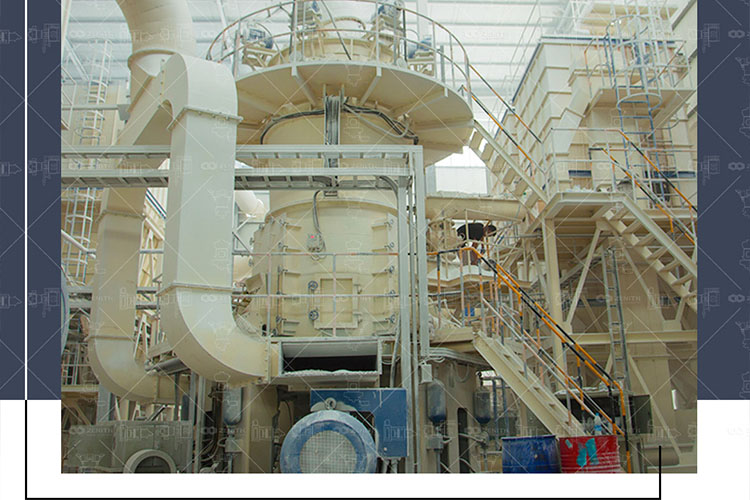
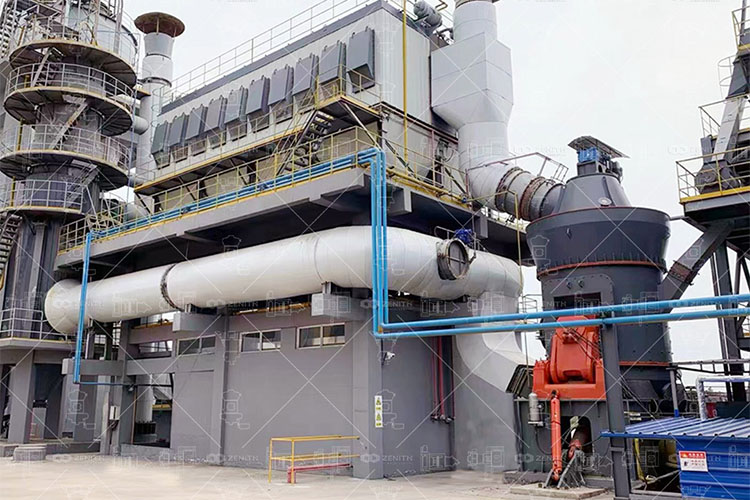
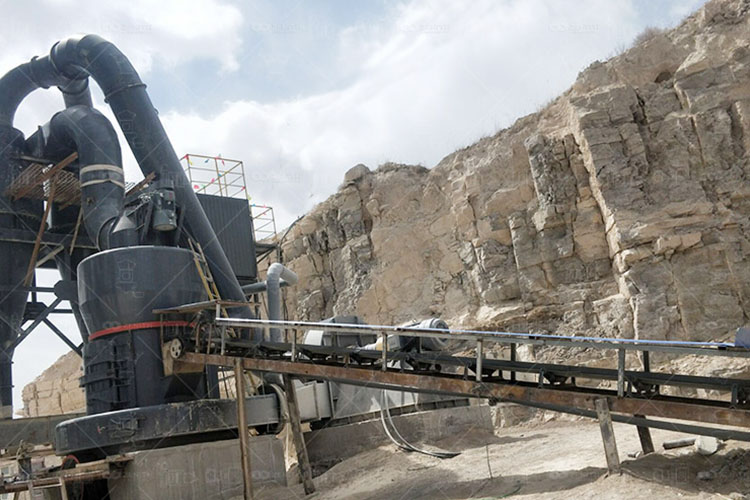
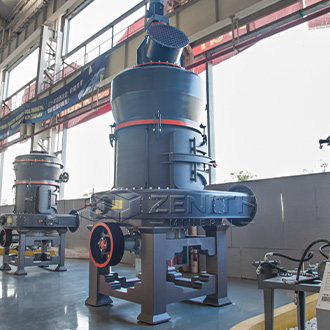
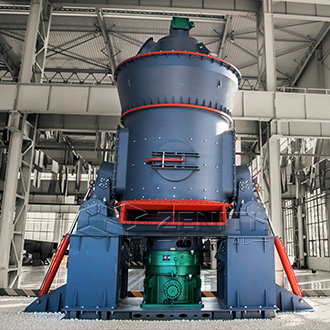
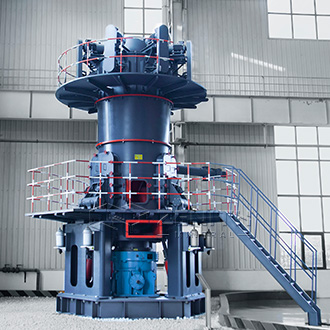
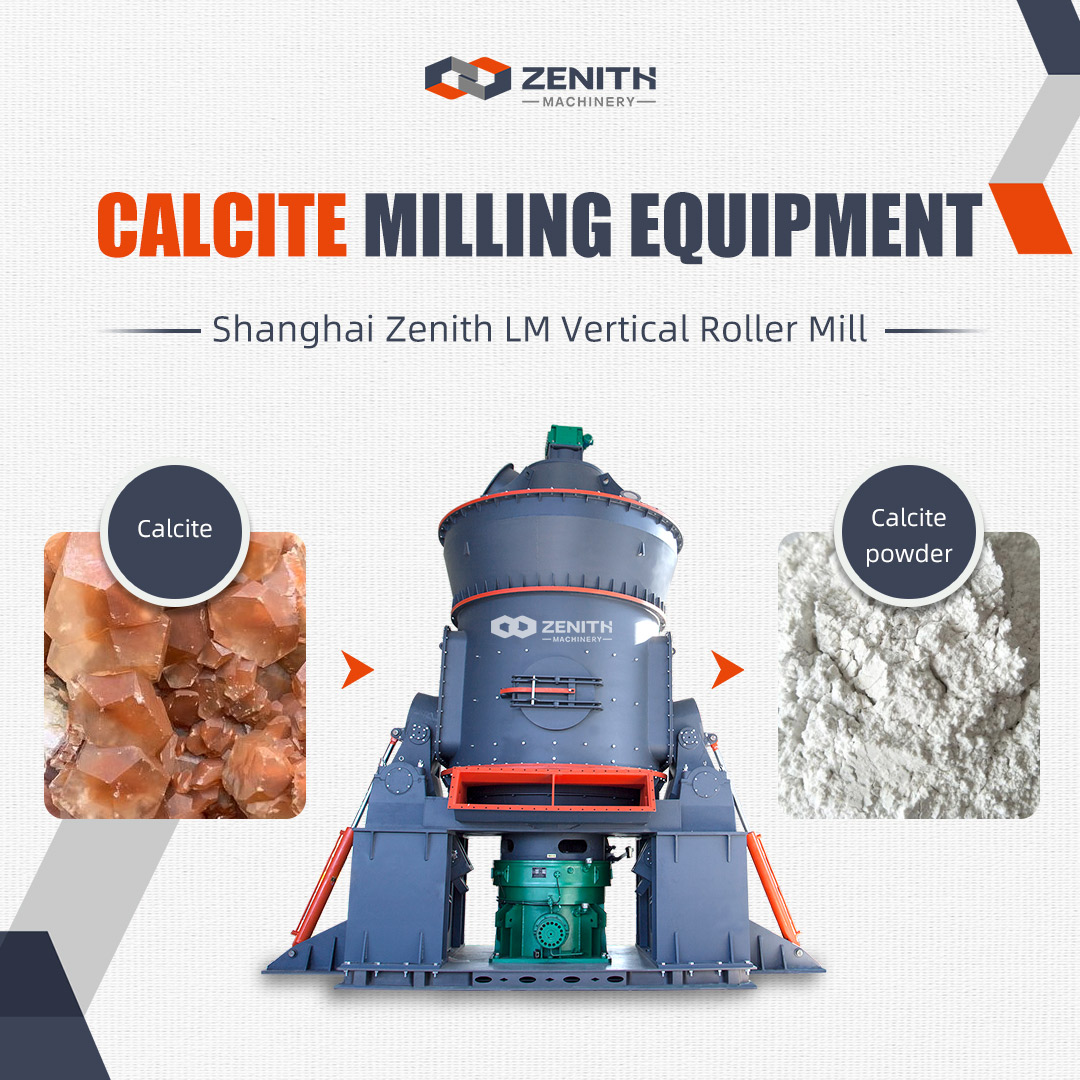
In the field of calcite (calcium carbonate) grinding, vertical mills have become the mainstream and preferred equipment, primarily due to their comprehensive advantages over traditional Raymond mills and ball mills in terms of efficiency, quality, environmental performance, and cost.
I. Exceptional Grinding Efficiency and Significant Energy Savings
Vertical mills operate on the “bed grinding” principle, where hydraulic systems apply pressure to grinding rollers, causing them to crush thick layers of material on rotating grinding discs. This mechanism directs energy directly and intensely onto the material being ground, achieving extremely high energy utilization rates. It eliminates the energy waste caused by the collision of numerous steel balls with liners in ball mills. Practice demonstrates that, for equivalent output and fineness, the system power consumption of vertical mills is approximately 20%-40% lower than traditional Raymond mills. In today's environment of high energy costs, this advantage is decisive.
II. Multi-Functional Integration with High System Consolidation
The vertical mill exemplifies a “multi-functional machine,” integrating crushing, grinding, drying, classification, and conveying. While grinding occurs within the mill, low-grade heat sources like kiln exhaust gases can be directly introduced for drying (reducing moisture to 6%-8%), eliminating the need for a separate drying system. Its built-in high-efficiency dynamic classifier separates qualified fine powder in real time, ensuring uniform particle size and preventing over-grinding. This highly integrated design enables a compact production line layout with minimal footprint, significantly reducing infrastructure investment.
III. Stable Product Quality and Flexible Adjustment
By adjusting the rotor speed of the classifier, product fineness can be conveniently and rapidly adjusted online within the range of 80-600 mesh (or even finer). The resulting product exhibits a concentrated particle size distribution and excellent particle morphology. The equipment operates smoothly with minimal vibration, ensuring stable and consistent chemical composition of the product. This makes it highly suitable for producing high-quality fillers and functional materials required by industries such as papermaking, coatings, and plastics.
IV. Outstanding Environmental and Intelligent Advantages
The entire system operates in a fully enclosed, negative-pressure environment with minimal dust leakage points. Combined with an efficient pulse-jet dust collector, dust emission concentrations easily fall below 20mg/Nm³, meeting stringent environmental requirements. Additionally, the vertical mill facilitates full automation control (DCS/PLC systems), enabling one-button start/stop, online monitoring, and intelligent regulation. This not only reduces labor costs but also ensures long-term safe, stable, and efficient production operations.
leave your message here, we'll send you
an Email immediately.