Staff Service — Time-saving · Accurate · Efficient
Time-limited Offer, Timely Technical Support
Get Price Staff Service
In the field of non-metallic mineral processing, barite (primarily composed of barium sulfate) is widely used in industries such as coatings, chemicals, and environmental protection, leading to increasingly stringent requirements for powder fineness. Selecting the appropriate grinding equipment directly impacts product quality and production costs. This article provides an in-depth analysis of the three mainstream grinding machines—the Raymond mill, the ring roller mill, and the ultra-fine vertical mill—to help you match your production needs.
I. Barite Grinding Requirements: Fineness and Capacity Are Key
The value of barite powder increases significantly with higher fineness:
80–400 mesh: Used in basic applications such as construction and general fillers;
Ultrafine powder (600 mesh and above): Used in high-end coatings, battery materials, and pharmaceuticals, requiring uniform particle size and strict impurity control;
Special requirements: For example, barite powder for radiation-shielding concrete must meet D97 ≤ 5 μm (approximately 2500 mesh).
Different fineness levels require different equipment selections, which must be determined by comprehensively evaluating production capacity, energy consumption, and investment costs.
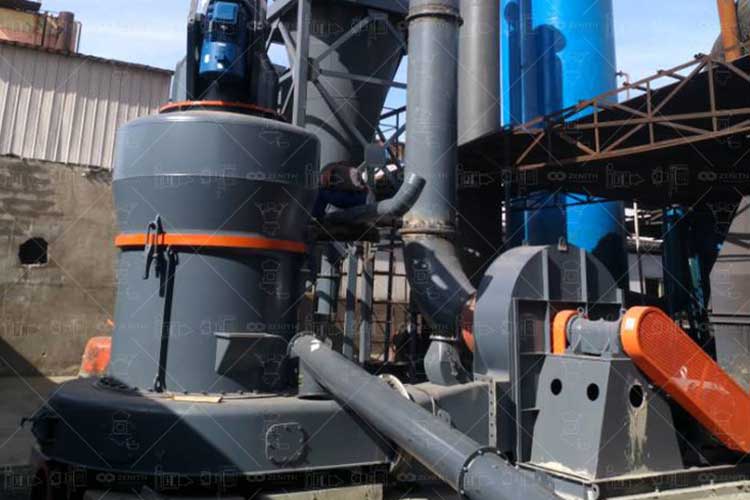
II. Comprehensive Performance Comparison of the Three Major Grinding Equipment
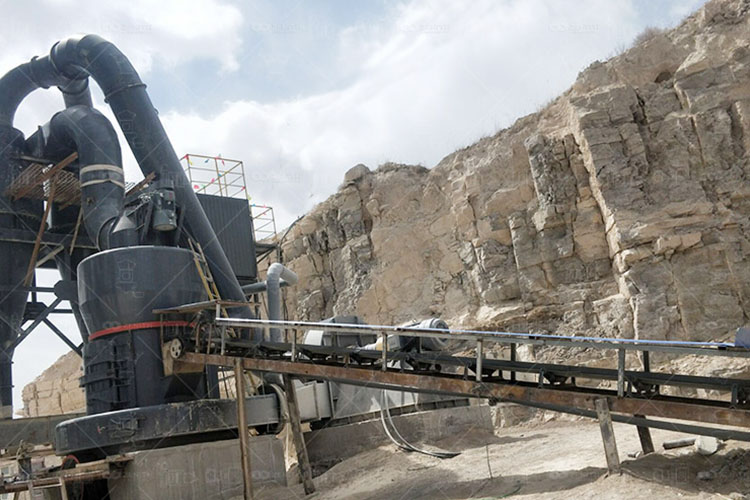
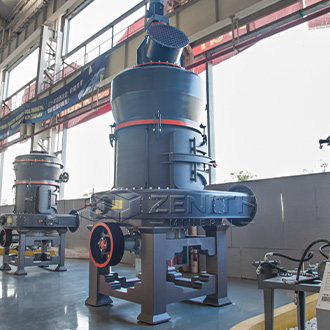
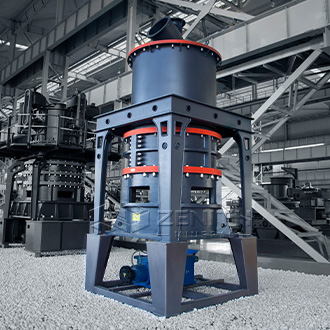
1. Raymond Mill: Economical and Practical
Suitable fineness: 80–400 mesh, with a sieve pass rate of 99.9%, suitable for medium-to-coarse powder processing;
Production capacity advantage: Up to 55 tons per hour, suitable for large-scale production;
Investment Features: Lower equipment cost (starting from around 100,000 RMB), simple maintenance, and controllable replacement costs for wear parts;
Typical Application: Used for construction paint-grade barite powder; power consumption is higher than that of vertical mills, but initial investment is lower.
Suitable Scenarios: Enterprises with small to medium production capacity needs and limited budgets, such as those in the building materials and metallurgy industries.
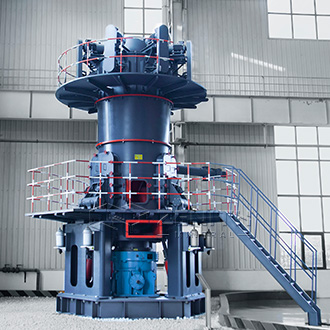
2. Ring Roller Mill: Ultra-fine Powder with High Wear Resistance
Fineness Breakthrough: Final particle size: 5–45 μm (325–2,500 mesh), with D97 ≤ 5 μm achievable in a single pass;
Production Capacity: 1–22 tons per hour, suitable for precision production;
Technical Highlights: Grinding wheels and rings are made of special wear-resistant steel, offering a service life more than twice that of Raymond mills and reducing downtime for maintenance;
Energy Consumption Comparison: Overall power consumption is lower than that of ball mills but slightly higher than that of ultra-fine vertical mills.
Applications: Processing of high-value-added ultrafine powders, such as barite powder for high-end coatings and powder metallurgy.
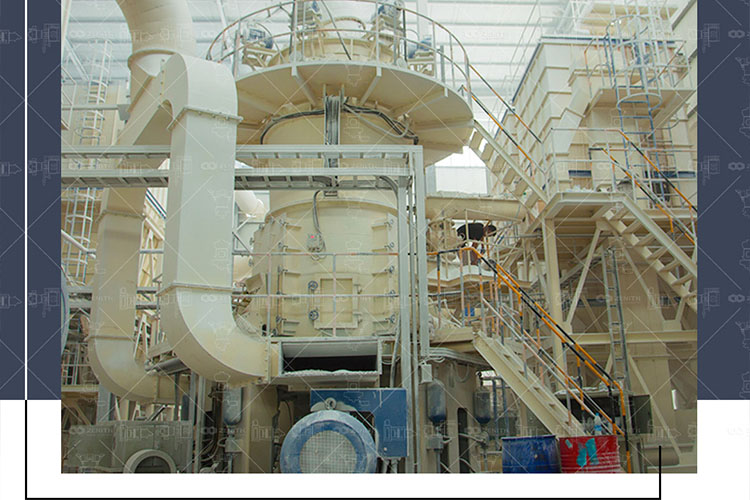
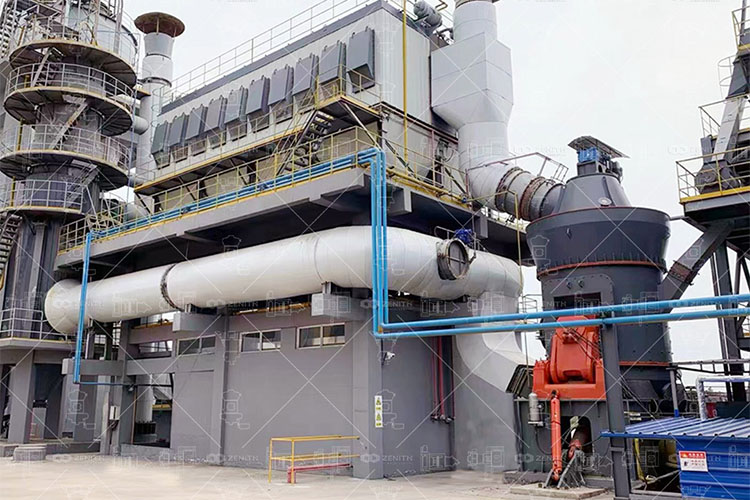
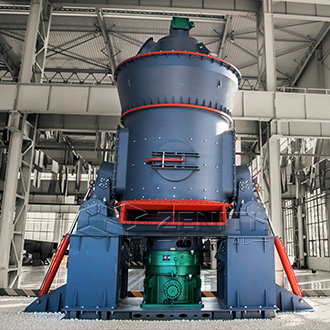
3. Ultrafine Vertical Mill: An Intelligent and Efficient “Energy-Saving Pioneer”
Ultimate Fineness: Final product size 3–45 μm; after secondary classification, reaches 3 μm (approx. 5000 mesh) with a narrow particle size distribution;
Production Capacity Leader: Hourly output of 1–40 tons; single-unit capacity equals that of 6 Raymond mills;
Energy-Saving Technology:
Features roller limiters and off-peak electricity strategies, resulting in lower energy consumption per ton compared to Raymond mills;
PLC fully automatic control reduces labor costs by 30%;
Safety Design: Excellent sealing and explosion-suppression performance, suitable for processing flammable powders.
Applications: Large mining groups and high-precision new materials sectors, such as battery materials and pharmaceutical-grade barite micropowder.
leave your message here, we'll send you
an Email immediately.