Staff Service — Time-saving · Accurate · Efficient
Time-limited Offer, Timely Technical Support
Get Price Staff Service
Calcium carbonate grinding is a systematic process with the core objective of efficiently and economically processing ore into powder products of varying fineness and applications. Equipment selection and process flow are designed around product specifications (fineness, purity, morphology).
I. Core Grinding Mill Models and Selection
The grinding mill serves as the “heart” of the process, with different models corresponding to distinct product fineness ranges.
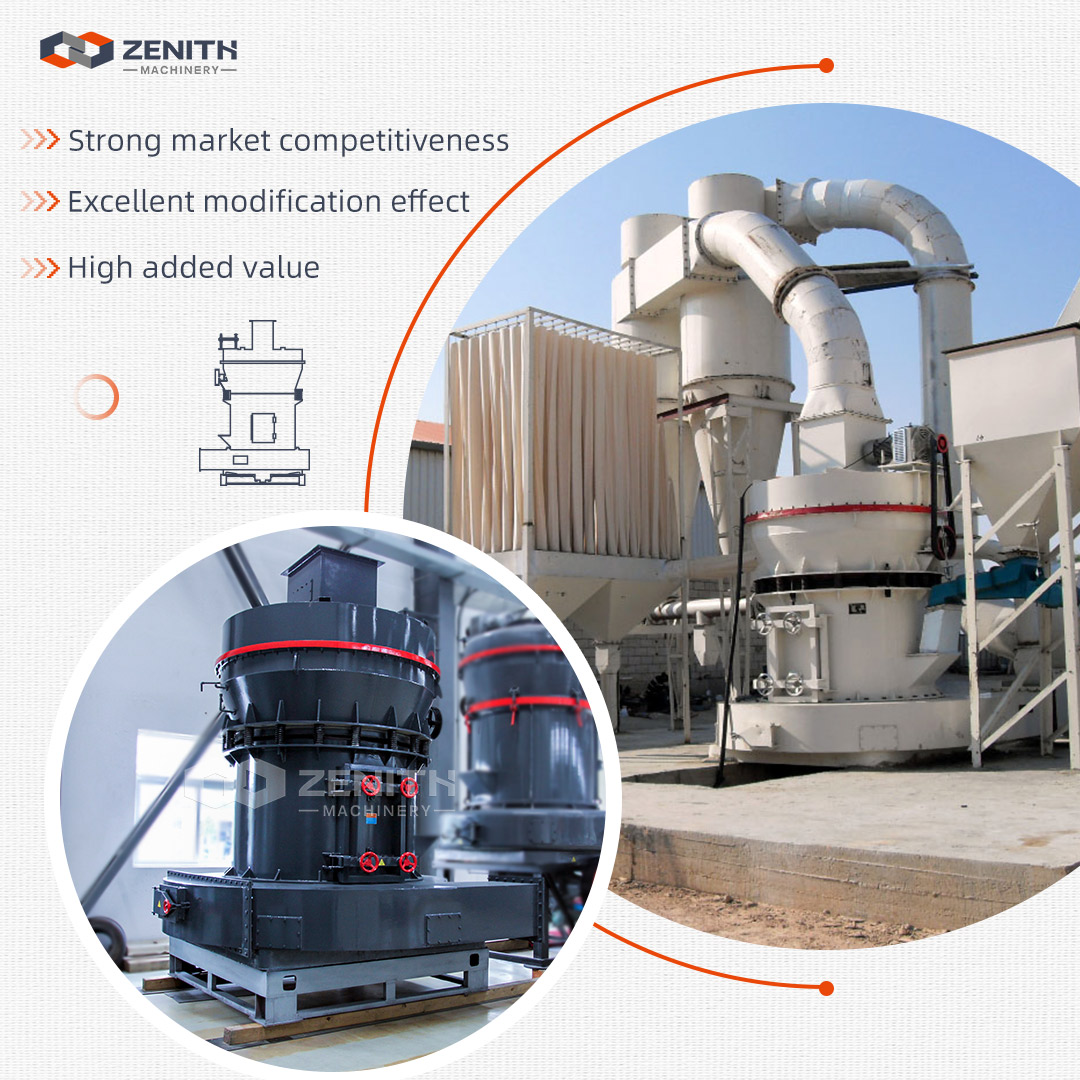
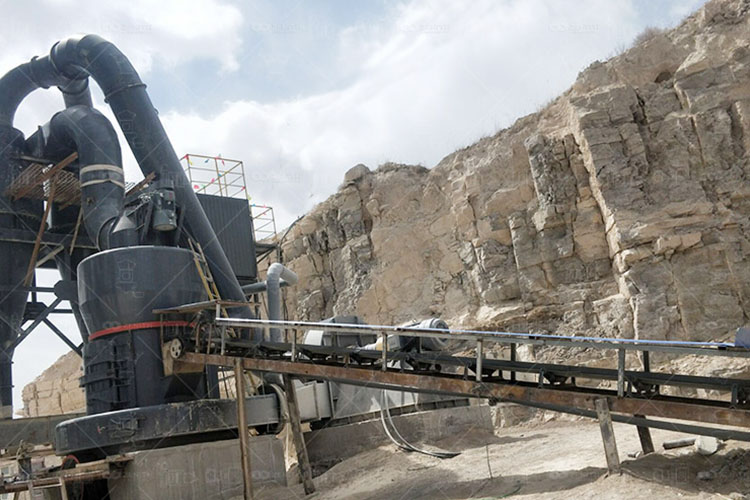
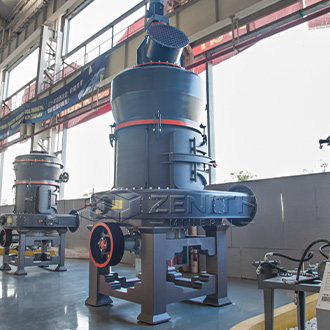
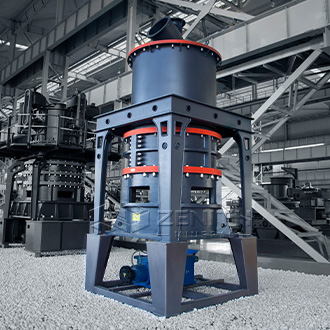
1. Raymond Mill (4R, 5R, 6R Series): Suitable for producing standard heavy calcium carbonate powder ranging from 80 to 325 mesh. The “R” in the model denotes the number of grinding rollers, with 4R, 5R, and 6R offering progressively higher capacities. Featuring mature design and low investment, it is the preferred choice for small-to-medium-scale production of general-purpose fillers. However, it has limitations in achieving fine particle sizes and exhibits relatively high energy consumption.
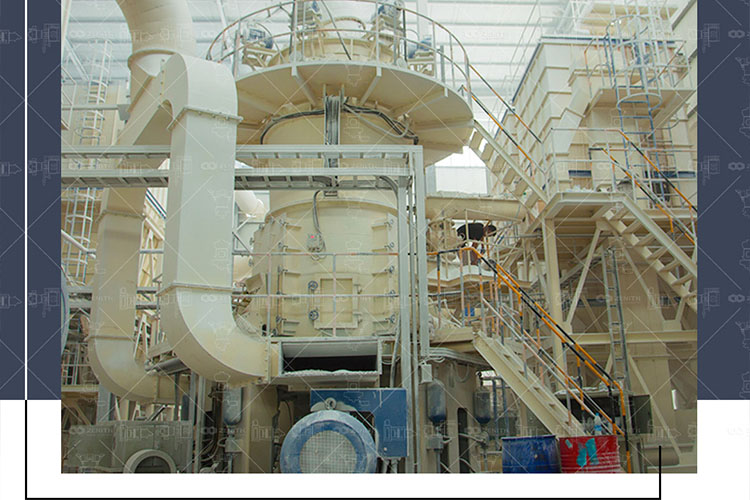
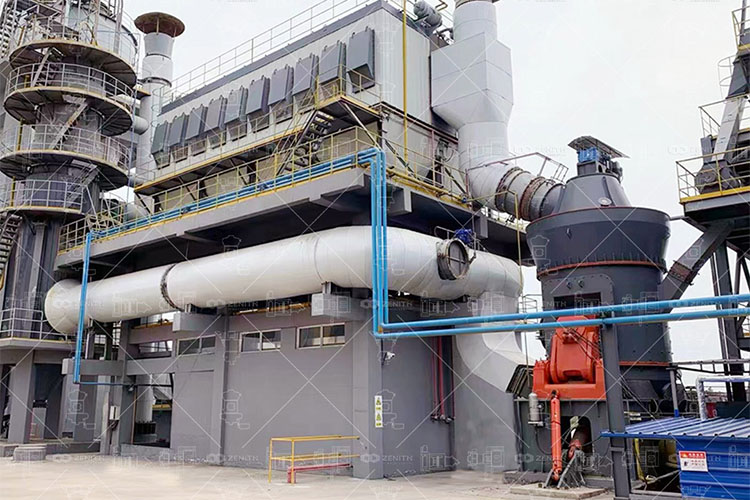
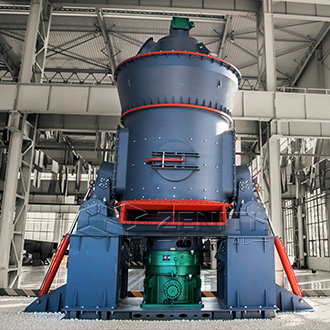
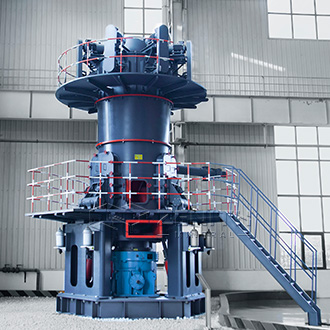
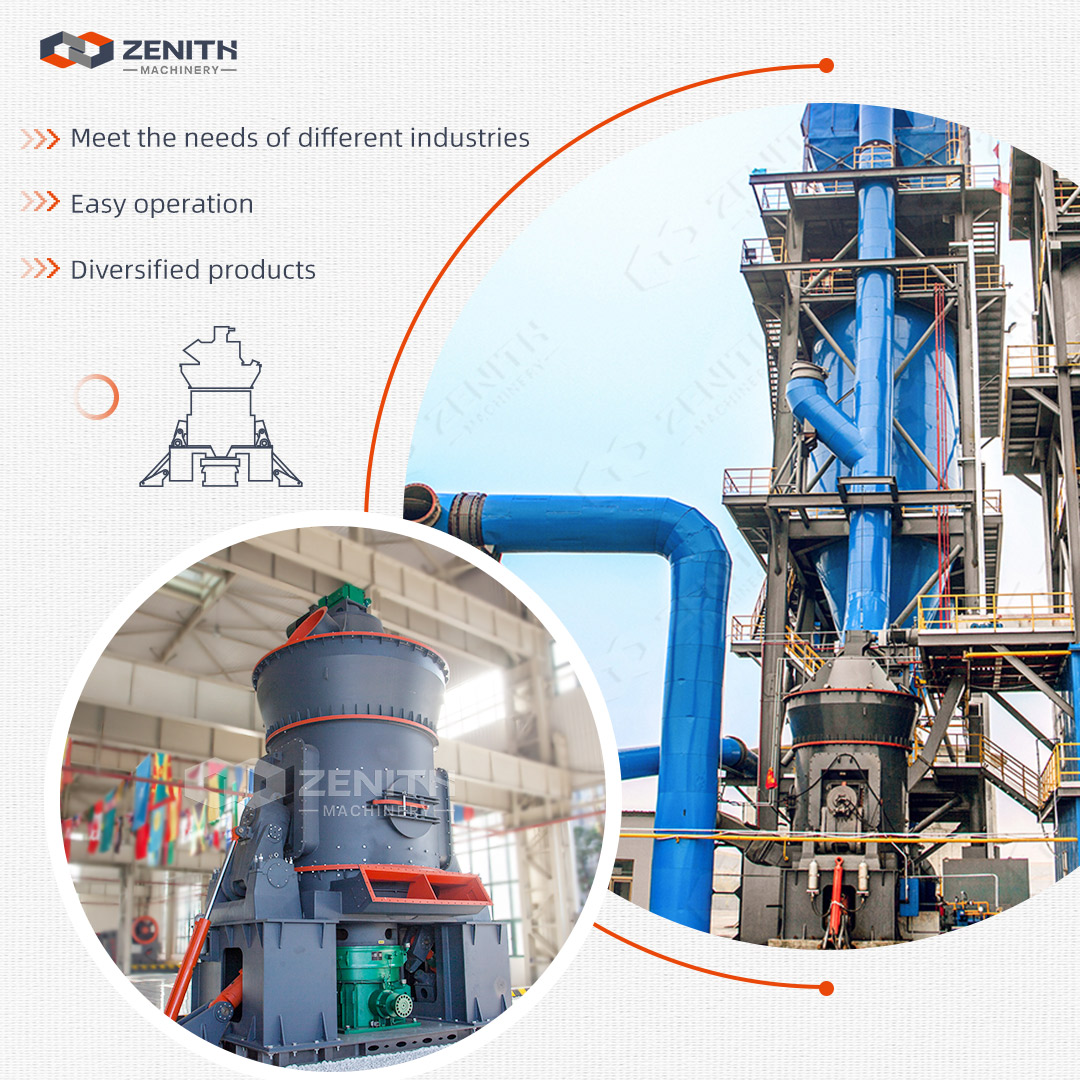
2. Vertical Mill: The mainstream equipment for modern large-scale production. Models like LM170K and LM280K typically use numerical designations representing grinding disc diameter. It integrates crushing, drying, grinding, and classification into one unit. With high single-unit capacity and 20%-40% lower energy consumption than Raymond mills, it can stably produce 80-600 mesh products. It can conveniently utilize kiln exhaust gas for drying, offering significant environmental advantages.
II. Typical Process Flow
A complete dry-process ultrafine powder production line typically comprises four major systems:
1. Crushing and Storage/Transportation System:
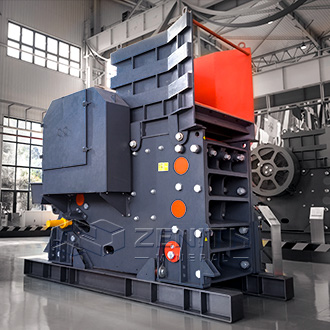
Large raw ore chunks (<500mm) undergo coarse crushing via jaw crushers, then are conveyed by elevators to raw material silos for storage. This provides stable, uniformly sized feedstock for the grinding system.
2. Grinding and Classification System (Core):
This forms the heart of the process. Taking a mainstream ultrafine powder production line as an example: Material from the storage silo is fed into a vertical mill via a quantitative feeder for grinding. Hot air within the mill dries moisture. The ground powder is carried by airflow to a top-mounted turbine classifier for separation. Oversized particles fall back to the grinding disc for reprocessing, while qualified fine powder proceeds to the next stage. The classifier's rotational speed is the most critical parameter for adjusting product fineness.
3. Collection and Finished Product System:
Dust-laden gas enters a cyclone separator for primary collection (capturing most finished product), then proceeds to a pulse-jet baghouse for secondary fine collection, ensuring emissions meet standards (<10mg/Nm³). Collected finished powder is conveyed via screw conveyors and elevators into finished product storage silos, ultimately shipped via automatic packaging machines or bulk tank trucks.
4. Automation Control System:
Modern production lines feature a standard central control room (DCS/PLC) for centralized monitoring and automatic adjustment of critical parameters including feed rate, mill load, fan airflow, classifier speed, temperature, and pressure. This ensures stable production, consistent product quality, and minimal energy consumption.
leave your message here, we'll send you
an Email immediately.