Staff Service — Time-saving · Accurate · Efficient
Time-limited Offer, Timely Technical Support
Get Price Staff Service
Factors affecting grinding mill capacity are multifaceted, involving material properties, equipment, processes, and operational practices. Systematically identifying and addressing these factors is key to enhancing efficiency and stability.
I. Material Properties: The Fundamental Factor
Factors: Material hardness, moisture content, stickiness, feed particle size, and grindability directly impact grinding difficulty and energy consumption. Excessive hardness, high moisture content (>3-5%), overly coarse particle size, or strong stickiness can all cause a sharp drop in grinding efficiency.
Solutions:
1. Pre-treatment: Strictly control raw material moisture content, adding drying processes when necessary. Implement a reliable pre-crushing system to ensure uniform and compliant feed size (typically ≤30mm).
2. Source Control: Select ore sources with good grindability or stabilize raw material composition through homogenization stockpiles.
II. Equipment Condition and Core Parameters as Direct Factors
Factors: Wear levels of grinding rollers/discs (or balls/rings) directly affect grinding pressure. Classifier efficiency (rotational speed, blade integrity) determines timely separation of fine particles. System airflow and pressure impact material conveyance and classification effectiveness.
Solutions:
1. Maintenance: Strictly execute maintenance schedules, regularly inspect and promptly replace worn wear parts, maintain optimal grinding clearance.
2. Parameter Optimization: Precisely adjust classifier speed and system fan dampers to ensure airflow volume and velocity optimally match current product fineness and output requirements.
3. Seal Integrity: Inspect and repair air leaks at all pipeline connections to maintain stable system negative pressure.
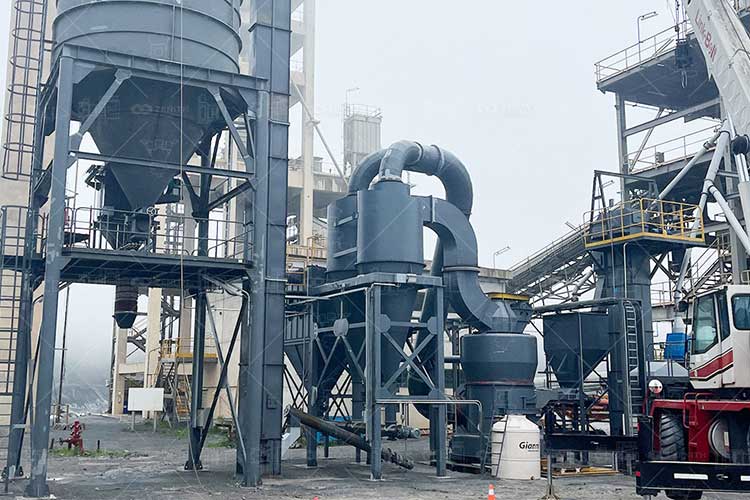
III. Process Operation and System Balance as Critical Factors
Factors: Uniform and stable feeding is fundamental. Dynamic equilibrium must be maintained for material layer thickness and grinding pressure within the mill. Excessive dust collector resistance impedes ventilation.
Solutions:
1. Stabilize Feeding: Employ precise quantitative feeding systems (e.g., variable-frequency belt scales) to eliminate “empty grinding” or “overloaded grinding” conditions.
2. Intelligent Control: Utilize an automated control system to adjust feed rate and grinding pressure based on parameters like main motor current and inlet/outlet pressure differential, maintaining stable material bed conditions.
3. Unobstructed Airflow: Regularly clean dust collector filter bags and pipelines to reduce system resistance.
leave your message here, we'll send you
an Email immediately.